
Volumetric weight is a measurement that indicates the space a parcel occupies during transport and is used to calculate the shipping price. Therefore, if you run an ecommerce business, it is important for you to understand how it works.
Why transport companies use volumetric weight
Calculating volumetric weight is essential to determine the space an item occupies during transport and its density. This measurement takes into account the size of the parcels, reflects the density of the goods and makes it possible to compare volume with the actual weight of a shipment.
For transport companies, knowing this information is important because space is limited in express transport and it is necessary to maximise efficiency in its use. As a result, this measurement helps reflect the real costs of shipping. For this reason, volumetric weight is compared with the actual gross weight, and the higher of the two is used as the chargeable weight.
Difference between actual weight and volumetric weight in a shipment
Volumetric weight is a measurement that makes it possible to determine how much space a shipment occupies in a means of transport, taking into account its physical volume. Actual weight, on the other hand, refers to the physical weight of the shipment expressed in kilograms. Volumetric weight, however, takes into account both the size and the volume of the load.
This explanation helps us better understand what volumetric weight is and why it is so important in transport and logistics, as it not only helps optimise space and set more accurate rates, but also improves efficiency in packaging goods and planning loads, helping to avoid situations of excess weight or lack of space.
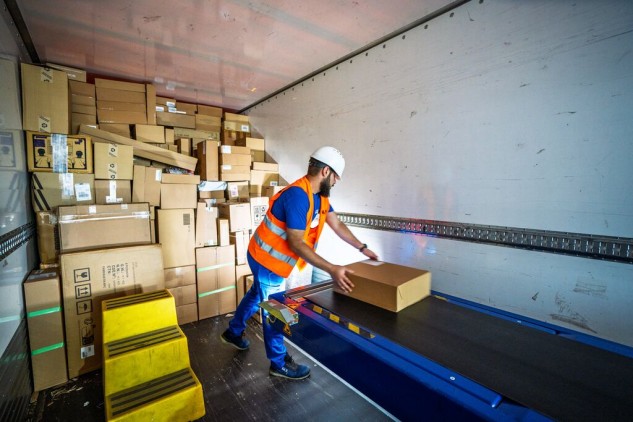
How to calculate volumetric weight step by step
To calculate volumetric weight, a formula is used that takes into account the dimensions of the shipment. Basically, it involves determining the dimensions of a parcel and applying a volumetric factor. How is this done? As follows:
Volumetric weight (kg) = Length × Width × Height / conversion factor
The length, width and height of the parcel are expressed in centimetres, and the result is obtained by applying a conversion factor, which at GLS is 250 (kg/m³) for standard shipments and 333 (kg/m³) for shipments that require maritime transport.
The result obtained by applying this formula is the volumetric weight, which must be compared with the actual weight of the shipment in order to determine the chargeable weight, which will be the higher of the two.
Why is this the case? Simply because a large and lightweight item will take up more space in the relevant means of transport than a small and heavy item, which directly impacts shipping logistics.
It is important to note that the conversion factor may vary depending on the units of measurement used and the regulations of each sector. At GLS, we provide a volumetric weight calculator for your shipments that applies a volume factor of 250 (kg/m³), while a factor of 333 (kg/m³) is applied for shipments that require maritime transport. We recommend reviewing your tariff and economic conditions, as these may vary depending on your agreement and the result may be different.
The volumetric weight calculation is indicative, and the final shipping price will depend on the agreed tariff and conditions.
Errors caused by not considering volumetric weight
If you run an ecommerce business and do not take volumetric weight into account, your costs may increase and customer satisfaction may be affected, as inefficiencies may arise and the service provided may deteriorate. Why does this happen?
- Shipping costs will increase for lightweight but bulky items, affecting your budget and the competitiveness of your business.
- Your goods may be poorly packaged and risk arriving damaged at their destination, as you will not be making optimal use of the available space inside the parcel.
- By not optimising that space, you will increase shipping costs and manage your resources inefficiently, resulting in lower profits.
For all these reasons, it is essential to consider the volumetric weight of your shipments in order to optimise transport space, reduce costs and improve the profitability of your business.